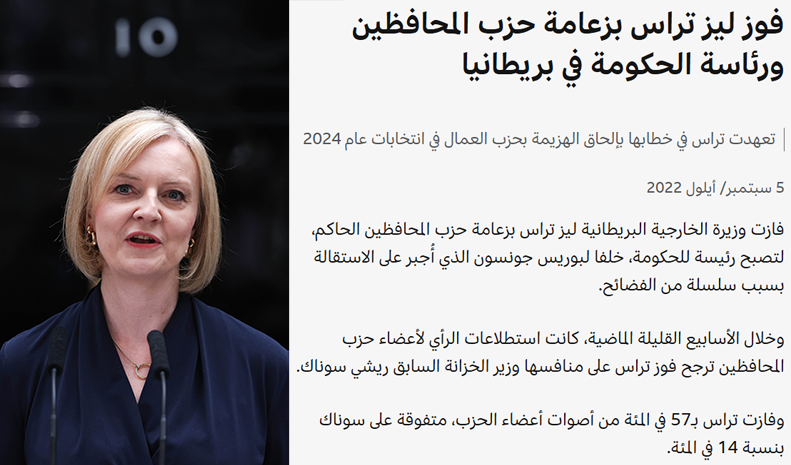
The text is the title, lead image caption and first three paragraphs of a September 2022 BBC News Arabic post about Liz Truss winning the leadership of the UK Conservative Party.
Citation: Marathe Mandar. 'Arabic rhetorical device annotation of "Liz Truss wins leadership of the Conservative Party and becomes Prime Minister of Britain"'. The Balagha Corpus Journal 1, no. 2 (2025): e2. https://doi.org/10.64393/balagha-corpus.2
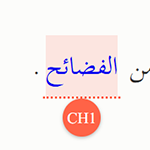
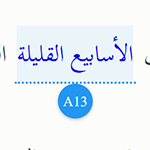
Not all of them were huge scandals, some more like mistakes rather than something truly scandalous. So it is "journalistic licence" to call them "scandals."
Not all of them were huge scandals, some more like mistakes rather than something truly scandalous. So it is "journalistic licence" to call them "scandals."
Rhetorical Impact Score: 1
Total Rhetorical Impact Score: 9
Word tokens
Arabic words are often composed of smaller parts which are added onto the start or end of the word. When performing quantitative analysis of Arabic texts, it is necessary to split such compound words into their constituent parts, or word tokens. When the compound words in this text were split, this resulted in 98 word tokens. Each of these has been identified and counted as shown below.
The text contains 6 different types of rhetorical devices, which have been used a total of 9 times. There are 98 word tokens in the text.
Rhetorical density
Rhetorical density is the number of rhetorical devices in the text (9) divided by the number of word tokens in the text (98), multiplied by 100.
The rhetorical density is therefore
(9 ÷ 98) * 100 = 9.1837 rhetorical devices per 100 word tokens.
This text is exactly at the 15th percentile of all the texts in the Balagha Corpus for rhetorical density. This means it is more rhetorically dense than 15% of all the
5 texts in the Balagha Corpus.
Rhetorical Impact Score
A weighting factor has been applied by the annotator for each of the 9 times a rhetorical device has been used. The weighting factor may be 1 or 2, depending on the impact, effectiveness or complexity of the way the rhetorical device has been used. These weighting factors are shown in the tables above as "Rhetorical Impact Score" for each rhetorical device.
The sum of the Rhetorical Impact Scores in this text is 9.
BALAGHA Score
The BALAGHA Score is the Rhetorical Impact Score divided by the number of word tokens in the text, multiplied by 100. By using the Rhetorical Impact Score rather than the number of rhetorical devices, the BALAGHA Score offers a more nuanced representation of rhetoricity than the rhetoric density alone.
This text's Rhetorical Impact Score is 9 and there are 98 word tokens. The BALAGHA Score is therefore
(9 ÷ 98) * 100 = 9.1837 impact-weighted rhetorical devices per 100 word tokens.
This text is between the 35th and 50th percentile of all the 5 texts in the Balagha Corpus for BALAGHA Score. This means it has a higher BALAGHA Score than 35% of all the 5 texts in the Balagha Corpus.
This text is therefore considered to have a level of rhetoricity which is "Below average".
Number of rhetorical devices
[+ Explain]
The number of times that rhetorical devices have been used in the text. For example, if a text contains 5 metaphors,
2 similes and 1 pun, the number of rhetorical devices is 5 + 2 + 1 = 8.
Arabic words are often composed of smaller parts which are added onto the start or end of the word. When performing quantitative analysis of Arabic texts, it is necessary to split such compound words into their constituent parts, or word tokens.
The BALAGHA Score is the Rhetorical Impact Score divided by the number of word tokens in the text, multiplied by 100.
For this text, the Rhetorical Impact Score is 9 and there are 98 word tokens.
The BALAGHA Score is therefore
(9 ÷ 98) * 100 = 9.1837 impact-weighted rhetorical devices per 100 word tokens.
9.1837 impact-weighted rhetorical devices per 100 word tokens
This chart illustrates the distribution of BALAGHA Scores in the Balagha Corpus, and the location of this text's BALAGHA Score in relation to the scores of other texts:
 Export JSON annotations
 Download original text


