 Export JSON annotations
 Download original text
وأعملُ مع رفاقِ الكدحِ في محجرْ
أسلُّ لهمْ رغيفَ الخبزِ،
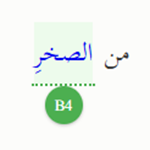
من الصخرِ
ولا أتوسَّلُ الصدقاتِ من بابِكْ
ولا أصغرْ
أمامَ بلاطِ أعتابكْ
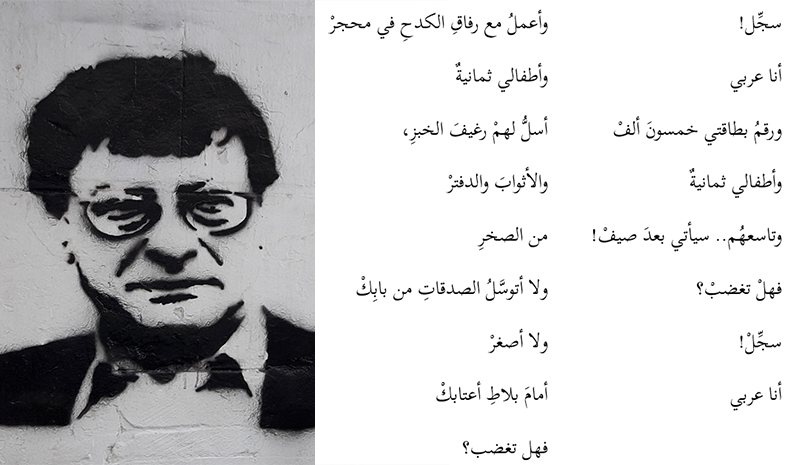
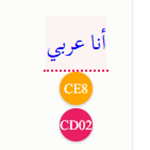
The text is the first 17 lines of Sajjil: ʾAnā ʿArabī, a landmark poem of Palestinian resistance literature, in which the speaker defiantly asserts his Arab identity, recounts his personal and collective hardships, and challenges the forces of dispossession and discrimination with unwavering dignity and pride.
Copyrighted
Except has been used under "fair use" rules for academic purposes
All the rhetorical devices in the text have been identified and annotated as shown below:
وأعملُ مع رفاقِ الكدحِ في محجرْ
أسلُّ لهمْ رغيفَ الخبزِ،
من الصخرِ
ولا أتوسَّلُ الصدقاتِ من بابِكْ
ولا أصغرْ
أمامَ بلاطِ أعتابكْ
The following rhetorical devices were found when a rhetorical device analysis was performed on the text.
# |
Word | Rhetorical Device | Annotator's explanation of the rhetorical device |
|---|---|---|---|
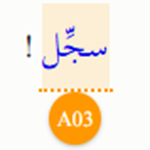
| Number: 1 | Device: A-03 The Imperative | Explanation This is grammatically a command, but pragmatically, it is a threat. Rhetorical Impact Score: 2 Score explanation: Score of 2 because it is a provocative and intense way to start the poem. | |
| Number: 2 | Device: CD-02 Evasive Response | Explanation Rather than giving his name, the speaker defies the person asking for his identification by saying that he is an Arab, which is an evasive response. Rhetorical Impact Score: 2 Score explanation: This response rhetorically draws the questioner's attention away from the individual to the nation. This is both a show of strength in the moment, and an allusion to the shared struggles and experiences of the nation. This justifies a score of 2. | |
Device: CE-8 Forewarning | Explanation This is a forewarning of the topic of the poem: the condition and struggles of the Arab nation. Rhetorical Impact Score: 1 | ||
| Number: 3 | Device: B-6 Hinting | Explanation This indirectly gives a suggestion of the large size of the Arab population. It is another show of strength. Rhetorical Impact Score: 1 | |
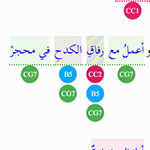
| Number: 4 | Device: CG-7 Integration of Imagery | Explanation The poet again draws attention to the size of the Arab nation. Rather than pointing to something physically present (such as his identification card's number in the previous line), he draws attention to his large family. Rhetorical Impact Score: 1 | |
| Number: 5 | Device: CC-2 Repetition With Varied Phrasing | Explanation This strengthens the idea of the previous line through repetition of the idea of the poet's large family. Rhetorical Impact Score: 1 | |
| Number: 6 | Device: A-05 The Interrogative | Explanation This is a rhetorical question, to express pride and to threaten. Rhetorical Impact Score: 1 | |
| Number: 7 | Device: CC-1 Repetition | Explanation Repetition of the starting word. Although this is technically also an instance of "The Interrogative", it's pragmatic effect here comes through repetition rather than as a new interrogative. Rhetorical Impact Score: 1 | |
| Number: 8 | Device: CC-1 Repetition | Explanation Repetition from line 2, for emphasis. Rhetorical Impact Score: 1 | |
| Number: 9 | Device: CG-7 Integration of Imagery | Explanation The poet gives an image of him and his friends working in a quarry to indicate that they are accustomed to hard work, and by implication, that they are physically strong. Rhetorical Impact Score: 1 | |
| Number: 10 | Device: B-5 Implicit Reference | Explanation The poet could have said "زملائي" (my colleagues) but he uses this kināya to give a more intense impression of the nature of their work. Rhetorical Impact Score: 1 | |
| Number: 11 | Device: CC-2 Repetition With Varied Phrasing | Explanation The mention of the poet's colleagues reinforces the idea from before that his is part of the Arab nation, and not standing alone. Rhetorical Impact Score: 1 | |
| Number: 12 | Device: CC-1 Repetition | Explanation Repetition for emphasis, from the 4th line. It also signals a transition to the next line. Rhetorical Impact Score: 1 | |
| Number: 13 | Device: B-6 Hinting | Explanation The poet is using this line to hint at his aspiration for his children. Rhetorical Impact Score: 1 | |
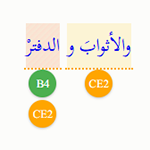
| Number: 14 | Device: B-4 Allegory | Explanation This is majaz for food in general. Rhetorical Impact Score: 1 | |
| Number: 15 | Device: CE-2 Syntactic Grouping | Explanation The poet lists several items with one explanation. Rhetorical Impact Score: 1 | |
| Number: 16 | Device: B-4 Allegory | Explanation This is majaz for education. Rhetorical Impact Score: 1 | |
| Number: 17 | Device: B-4 Allegory | Explanation This is majaz for the poet's hard word in the quarry. Rhetorical Impact Score: 1 | |
| Number: 18 | Device: B-4 Allegory | Explanation The poet uses باب to represent the questioner's nation, not literally his house or door. Rhetorical Impact Score: 1 | |
| Number: 19 | Device: CC-2 Repetition With Varied Phrasing | Explanation This is a different way of saying من بابك which was mentioned immediately before this, thus reinforcing the poet's point. Rhetorical Impact Score: 1 | |
| Number: 20 | Device: CC-1 Repetition | Explanation A repetition of the هل تغضب from before. The repetition is used to mark the internal divisions in the structure of the poem. Rhetorical Impact Score: 1 | |
Total Rhetorical Impact Score: 23 |
|||
# |
Rhetorical device |
Text | Annotator's explanation of the rhetorical device |
|---|---|---|---|
| Number: 1 | Device: A-03 The Imperative | Explanation This is grammatically a command, but pragmatically, it is a threat. Rhetorical Impact Score: 2 Score explanation: Score of 2 because it is a provocative and intense way to start the poem. | |
| Number: 2 | Device: A-05 The Interrogative | Explanation This is a rhetorical question, to express pride and to threaten. Rhetorical Impact Score: 1 | |
| Number: 3 | Device: B-4 Allegory | Explanation This is majaz for food in general. Rhetorical Impact Score: 1 | |
| Number: 4 | Explanation This is majaz for education. Rhetorical Impact Score: 1 | ||
| Number: 5 | Explanation This is majaz for the poet's hard word in the quarry. Rhetorical Impact Score: 1 | ||
| Number: 6 | Explanation The poet uses باب to represent the questioner's nation, not literally his house or door. Rhetorical Impact Score: 1 | ||
| Number: 7 | Device: B-5 Implicit Reference | Explanation The poet could have said "زملائي" (my colleagues) but he uses this kināya to give a more intense impression of the nature of their work. Rhetorical Impact Score: 1 | |
| Number: 8 | Device: B-6 Hinting | Explanation This indirectly gives a suggestion of the large size of the Arab population. It is another show of strength. Rhetorical Impact Score: 1 | |
| Number: 9 | Explanation The poet is using this line to hint at his aspiration for his children. Rhetorical Impact Score: 1 | ||
| Number: 10 | Device: CC-1 Repetition | Explanation Repetition of the starting word. Although this is technically also an instance of "The Interrogative", it's pragmatic effect here comes through repetition rather than as a new interrogative. Rhetorical Impact Score: 1 | |
| Number: 11 | Explanation Repetition from line 2, for emphasis. Rhetorical Impact Score: 1 | ||
| Number: 12 | Explanation Repetition for emphasis, from the 4th line. It also signals a transition to the next line. Rhetorical Impact Score: 1 | ||
| Number: 13 | Explanation A repetition of the هل تغضب from before. The repetition is used to mark the internal divisions in the structure of the poem. Rhetorical Impact Score: 1 | ||
| Number: 14 | Device: CC-2 Repetition With Varied Phrasing | Explanation This strengthens the idea of the previous line through repetition of the idea of the poet's large family. Rhetorical Impact Score: 1 | |
| Number: 15 | Explanation The mention of the poet's colleagues reinforces the idea from before that his is part of the Arab nation, and not standing alone. Rhetorical Impact Score: 1 | ||
| Number: 16 | Explanation This is a different way of saying من بابك which was mentioned immediately before this, thus reinforcing the poet's point. Rhetorical Impact Score: 1 | ||
| Number: 17 | Device: CD-02 Evasive Response | Explanation Rather than giving his name, the speaker defies the person asking for his identification by saying that he is an Arab, which is an evasive response. Rhetorical Impact Score: 2 Score explanation: This response rhetorically draws the questioner's attention away from the individual to the nation. This is both a show of strength in the moment, and an allusion to the shared struggles and experiences of the nation. This justifies a score of 2. | |
| Number: 18 | Device: CE-2 Syntactic Grouping | Explanation The poet lists several items with one explanation. Rhetorical Impact Score: 1 | |
| Number: 19 | Device: CE-8 Forewarning | Explanation This is a forewarning of the topic of the poem: the condition and struggles of the Arab nation. Rhetorical Impact Score: 1 | |
| Number: 20 | Device: CG-7 Integration of Imagery | Explanation The poet again draws attention to the size of the Arab nation. Rather than pointing to something physically present (such as his identification card's number in the previous line), he draws attention to his large family. Rhetorical Impact Score: 1 | |
| Number: 21 | Explanation The poet gives an image of him and his friends working in a quarry to indicate that they are accustomed to hard work, and by implication, that they are physically strong. Rhetorical Impact Score: 1 | ||
Total Rhetorical Impact Score: 23 |
|||
Arabic words are often composed of smaller parts which are added onto the start or end of the word. When performing quantitative analysis of Arabic texts, it is necessary to split such compound words into their constituent parts, or word tokens. When the compound words in this text were split, this resulted in 64 word tokens. Each of these has been identified and counted as shown below.
سجل1 أنا2 عربي3 و+4 رقم5 بطاقت6 +ي7 850000 و+9 أطفال10 +ي11 128 و+13 تاسع14 +هم15 س+16 يأتي17 بعد18 صيف19 ف+20 هل21 تغضب22 سجل23 أنا24 عربي25 و+26 أعمل27 مع28 رفاق29 الكدح30 في31 محجر32 و+33 أطفال34 +ي35 368 أسل37 ل38 +هم39 رغيف40 الخبز41 و+42 الأثواب43 و+44 الدفتر45 من46 الصخر47 و+48 لا49 أتوسل50 الصدقات51 من52 باب53 +ك54 و+55 لا56 أصغر57 أمام58 بلاط59 أعتاب60 +ك61 ف+62 هل63 تغضب64
The text contains 11 different types of rhetorical devices, which have been used a total of 21 times. There are 64 word tokens in the text.
Rhetorical density is the number of rhetorical devices in the text (21) divided by the number of word tokens in the text (64), multiplied by 100.
The rhetorical density is therefore (21 ÷ 64) * 100 = 32.813 rhetorical devices per 100 word tokens.
This text is exactly at the 65th percentile of all the texts in the Balagha Corpus for rhetorical density. This means it is more rhetorically dense than 65% of all the 5 texts in the Balagha Corpus.
A weighting factor has been applied by the annotator for each of the 21 times a rhetorical device has been used. The weighting factor may be 1 or 2, depending on the impact, effectiveness or complexity of the way the rhetorical device has been used. These weighting factors are shown in the tables above as "Rhetorical Impact Score" for each rhetorical device. The sum of the Rhetorical Impact Scores in this text is 23.
The BALAGHA Score is the Rhetorical Impact Score divided by the number of word tokens in the text, multiplied by 100. By using the Rhetorical Impact Score rather than the number of rhetorical devices, the BALAGHA Score offers a more nuanced representation of rhetoricity than the rhetoric density alone.
This text's Rhetorical Impact Score is 23 and there are 64 word tokens. The BALAGHA Score is therefore (23 ÷ 64) * 100 = 35.938 impact-weighted rhetorical devices per 100 word tokens.
This text is between the 40th and 65th percentile of all the 5 texts in the Balagha Corpus for BALAGHA Score. This means it has a higher BALAGHA Score than 40% of all the 5 texts in the Balagha Corpus. This text is therefore considered to have a level of rhetoricity which is "Above average".
The number of word tokens in the text.
Arabic words are often composed of smaller parts which are added onto the start or end of the word. When performing quantitative analysis of Arabic texts, it is necessary to split such compound words into their constituent parts, or word tokens.
Rhetorical density is the number of rhetorical devices in the text divided by the number of word tokens in the text, multiplied by 100.
For this text, there are 21 rhetorical devices and 64 word tokens.
The rhetorical density is therefore (21 ÷ 64) * 100 = 32.813 rhetorical devices per 100 words or word tokens.
The number of rhetorical devices in the text, but with a weighting for each one based on its impact, effectiveness or complexity.
The BALAGHA Score is the Rhetorical Impact Score divided by the number of word tokens in the text, multiplied by 100.
For this text, the Rhetorical Impact Score is 23 and there are 64 word tokens.
The BALAGHA Score is therefore (23 ÷ 64) * 100 = 35.938 impact-weighted rhetorical devices per 100 word tokens.
This chart illustrates the distribution of BALAGHA Scores in the Balagha Corpus, and the location of this text's BALAGHA Score in relation to the scores of other texts: