# |
Word |
Rhetorical Device |
Annotator's explanation of the rhetorical device |
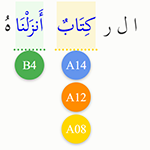
| Number: 1 | | Device: A-08 Definiteness and Indefiniteness | Explanation From the context we know that كتابُ refers to the Qur'an, so it is strange that an indefinite noun (كتابٌ) would refer to a definite object (The Qur'an), especially when the Qur'an has not already been mentioned by name.
The pragmatic effect of this is to make it appear that the identity of كتابٌ is not important, whereas it's purpose (which will be explained in the next clause) is more important.
Another pragmatic effect is to create a shared connection with those who know about the Qur'an because the identity of كتابٌ is known and does not need to be stated explicitly. Alternatively, for those who do not know about the Qur'an, كتابٌ creates a sense of mystery. Rhetorical Impact Score: 2 Score explanation: Score of 2 due to the multiple pragmatic effects. |
Device: A-12 Foregrounding and Backgrounding | Explanation The normal verb-subject-object sentence structure would be "أنزلنا كتابا إليك", but there is foregrounding of كتابٌ for emphasis, and to introduce it prominently as the subject of the subsequent clause.
The use of an indefinite noun كتابٌ to refer to a definite noun, The Qur'an, creates a rhetorical tension, which grabs the listener's attention at the start of the surah. Rhetorical Impact Score: 2 Score explanation: This makes for a powerful start to the surah which draws the listener into wondering about what the topic is. |
Device: A-14 Ellipsis | Explanation The expected nominal sentence would be "الكتاب الذي أنزرناه إليك" but the use of كتابٌ means the الذي can be omitted. This results in a tighter, more attention-grabbing and impactful "كتابٌ أنزلناه إليك" which is particularly effective at the start of the surah. Rhetorical Impact Score: 2 Score explanation: Most sentences would start with establishing some type of context. However, the lack of any context due to ellipsis makes for a bold and dramatic start. |
| Number: 2 | | Device: B-4 Allegory | Explanation The Qur'an is not physically sent down, so the أنزلنا is meant figuratively. It is a cognitive allegory. Rhetorical Impact Score: 1 |
| Number: 3 | | Device: CD-1 Deliberate Ambiguity | Explanation The identity of إليك is not specified. It is understood to be Prophet Muḥammad. However it could conceivably refer to any person listening to the surah, mankind in general (الإنسان), or the Angel Gabriel who was the means of the إنزال mentioned in the previous word. This ambiguity increases the rhetorical depth of the word. Rhetorical Impact Score: 2 Score explanation: Score of 2 due to multiple layers of meaning created by this ambiguity. |
| Number: 4 | | Device: B-4 Allegory | Explanation The general word الناس indicates the mission of the Prophet is for the whole of mankind. However this is a general-to-specific synecdoche because those who are already in النور don't need to be brought into النور. Rhetorical Impact Score: 1 |
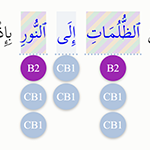
| Number: 5 | | Device: CB-1 Antithesis | Explanation Antithesis between opposites الظلمات and النور. Rhetorical Impact Score: 1 |
| Device: CB-1 Antithesis | Explanation There is a contrast between الظلمات which is plural versus النور which is singular. This contrast indicates that there are many types of darkness, but only one light. Rhetorical Impact Score: 1 |
| Number: 6 | | Device: B-2 Metaphor | Explanation الظلمات is a metaphor for ignorance. Rhetorical Impact Score: 1 |
| Number: 7 | | Device: B-2 Metaphor | Explanation النور is a metaphor for guidance. Rhetorical Impact Score: 1 |
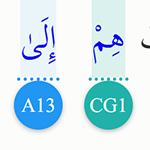
| Number: 8 | | Device: CG-1 Rhetorical Shift | Explanation The verse starts with أنزلنا with the نا referring to Allah in the first person plural. To maintain consistency, Allah should be referred to here as بإذننا.
However Allah is here referred to in the third person, even though both refer to the same Allah. This causes a rhetorical shift from the agent that sent down the revelation ("نحن") to the people (الناس) and the Lord they worship. Rhetorical Impact Score: 1 |
| Number: 9 | | Device: A-13 Brevity, Verbosity and Moderation | Explanation The next clause is a further explanation of the previous, making it an iṭnāb. Rhetorical Impact Score: 1 |
| Number: 10 | | Device: B-2 Metaphor | Explanation The صراط is not a physical path, but it carries the figurative meaning of a way of life. Rhetorical Impact Score: 1 |
| Number: 11 | | Device: CG-10 Meaningful Proper Nouns | Explanation Use of this name for Allah indicates his power to send down revelations and to bring people from darknesses to light. Rhetorical Impact Score: 1 |
| Number: 12 | | Device: A-13 Brevity, Verbosity and Moderation | Explanation The second name and descriptor for Allah is verbosity, which is used to intensify his attribute mentioned in first name. Rhetorical Impact Score: 1 |
| Device: CG-10 Meaningful Proper Nouns | Explanation Use of this name for Allah indicates his praiseworthiness for sending down revelations to bring people from darknesses to light. Rhetorical Impact Score: 1 |
| Number: 13 | | Device: A-13 Brevity, Verbosity and Moderation | Explanation This is the third sequential description of the owner of الصراط, with each description giving more information and glorifying him. Rhetorical Impact Score: 1 |
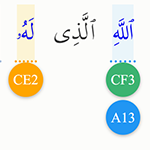
Device: CF-3 Similarities of the Start & Finish | Explanation The start of this verse is semantically connected to the end of the previous verse: both use words that describe Allah. Rhetorical Impact Score: 1 |
| Number: 14 | | Device: CE-2 Syntactic Grouping | Explanation The verdict له is equally applied the ما في السماوات and ما في الأرض. Rhetorical Impact Score: 1 |
| Number: 15 | | Device: CB-1 Antithesis | Explanation There is semantic contrast between السماوات and الأرض. Rhetorical Impact Score: 1 |
Device: CF-4 Parallelism | Explanation ما في السماوات and ما في الأرض have a parallel structure, which unifies them. Rhetorical Impact Score: 1 |
| Number: 16 | | Device: CB-1 Antithesis | Explanation There is semantic contrast between إليك which refers to believers, and الكافرين, the disbelievers. Rhetorical Impact Score: 1 |
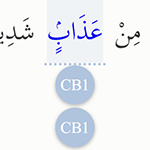
| Number: 17 | | Device: CB-1 Antithesis | Explanation There is semantic contrast between النور and عذاب, the former for the believers and the latter for the disbelievers. Rhetorical Impact Score: 1 |
| Device: CB-1 Antithesis | Explanation There is syntactic contrast between the grammatically definite النور and الظلمات and the grammatically indefinite عذابٍ.
This rhetorically signals that the punishment (عذابٍ) is not only an unknown entity, but is is also an unlimited entity. Rhetorical Impact Score: 1 |
|
Total Rhetorical Impact Score: 28 |
 Export JSON annotations
 Download original text