 Export JSON annotations
 Download original text
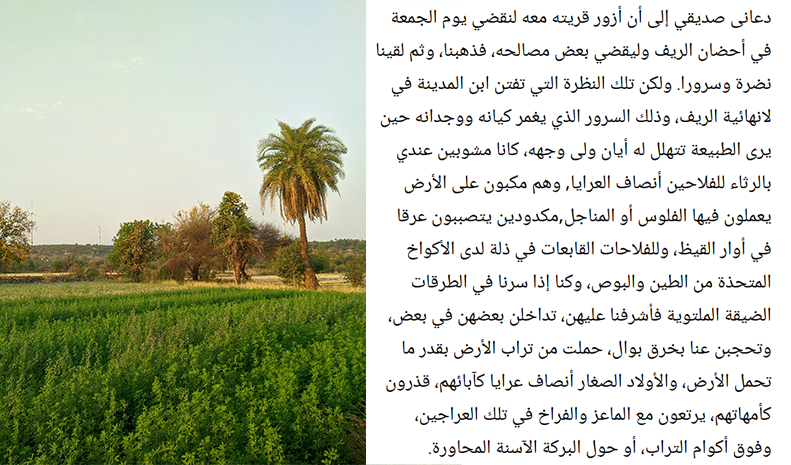
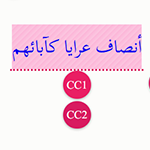
دعانى صديقي إلى أن أزور قريته معه لنقضي يوم الجمعة في أحضان الريف وليقضي بعض مصالحه، فذهبنا، وثم لقينا نضرة وسرورا. ولكن تلك النظرة التي تفتن ابن المدينة في لانهائية الريف، وذلك السرور الذي يغمر كيانه ووجدانه حين يرى الطبيعة تتهلل له أيان ولى وجهه، كانا مشوبين عندي بالرثاء للفلاحين أنصاف العرايا, وهم مكبون على الأرض يعملون فيها الفلوس أو المناجل, مكدودين يتصببون عرقا في أوار القيظ، وللفلاحات القابعات في ذلة لدى الأكواخ المتحذة من الطين والبوص، وكنا إذا سرنا في الطرقات الضيقة الملتوية فأشرفنا عليهن، تداخلن بعضهن في بعض، وتحجبن عنا بخرق بوال، حملت من تراب الأرض بقدر ما تحمل الأرض، والأولاد الصغار أنصاف عرايا كآبائهم، قذرون كأمهاتهم، يرتعون مع الماعز والفراخ في تلك العراجين، وفوق أكوام التراب، أو حول البركة الآسنة المحاورة.
The text is the first paragraph of Ḥadīth al-Qarya, a reflective short story by Maḥmūd Ṭāhir Lāshīn set in 1920s Egypt that captures a city-dweller’s impressions of rural life, revealing both its idyllic charm and its harsh social realities.
Below average
BALAGHA Score
14
Author
Maḥmūd Ṭāhir Lāshīn (1894 - 1954)
Published
1929
Genre
Source
Copyright
No copyright
Copyright expired 70 years after author's death
Annotator
Balagha Corpus
Text# 3
Taxonomy
Published
28 July 2025
Citation: Marathe Mandar. 'Arabic rhetorical device annotation of "Village Talk"'. The Balagha Corpus Journal 1, no. 3 (2025): e3. https://doi.org/10.64393/balagha-corpus.3
Annotations of rhetorical devices in the text
All the rhetorical devices in the text have been identified and annotated as shown below:
Show badges
Hide badges
Key
Overlapping Devices
Rhetorical devices in the text
The following rhetorical devices were found when a rhetorical device analysis was performed on the text.
WordDevice
# |
Word | Rhetorical Device | Annotator's explanation of the rhetorical device |
|---|---|---|---|
| Number: 1 | Device: A-13 Brevity, Verbosity and Moderation | Explanation The details of the friend are not included. The author gradually reveals information about the friend during the course of the story, especially as a way of building a dialogue for his own thoughts and opinions. Rhetorical Impact Score: 1 | |
| Number: 2 | Device: B-2 Metaphor | Explanation This is a metaphor to make the countryside seem warm, welcoming and comfortable. Rhetorical Impact Score: 1 | |
| Number: 3 | Device: CC-1 Repetition | Explanation Repetition with تقضي in the previous clause, gives a sense of smoothness which correlates with setting the relaxed tone. Rhetorical Impact Score: 1 | |
| Number: 4 | Device: A-13 Brevity, Verbosity and Moderation | Explanation The brevity here indicates that what exactly his friend's مصالح are is not relevant. The reader is left wondering whether it will or will not be relevant later? This ambiguity creates a little tension. Rhetorical Impact Score: 1 | |
| Number: 5 | Device: A-11 Conjunction and Disjunction | Explanation This و helps maintain the pace and smoothness of the whole sentence. Rhetorical Impact Score: 1 | |
| Number: 6 | Device: B-2 Metaphor | Explanation This is a metaphor. Rhetorical Impact Score: 1 | |
| Number: 7 | Device: B-4 Allegory | Explanation This is a majaz mursal with causality relationship (علاقة سببية). It indicates that the person is the "product" of city life. Rhetorical Impact Score: 1 | |
| Number: 8 | Device: B-2 Metaphor | Explanation This is a metaphor which expresses the vastness of the countryside. Rhetorical Impact Score: 1 | |
| Number: 9 | Device: CC-1 Repetition | Explanation The repetition of سرور emphasises the joy that is being experienced. Rhetorical Impact Score: 1 | |
| Number: 10 | Device: B-2 Metaphor | Explanation The author does not mean submerging in a literal sense, but it is in a figurative sense. Rhetorical Impact Score: 1 | |
| Number: 11 | Device: CH-11 Personification | Explanation Personification of "nature" which is raising the mood of the author. Rhetorical Impact Score: 1 | |
| Number: 12 | Device: B-2 Metaphor | Explanation This is a metaphor to convey a sense of nature enveloping him from all sides, and not literally the turning of the head. Rhetorical Impact Score: 1 | |
| Number: 13 | Device: B-5 Implicit Reference | Explanation It may mean they were literally fallen on the ground, or it may mean figuratively that they were humiliated or degraded by the physical work they were doing. Rhetorical Impact Score: 1 | |
Device: CI-3 Concordance of Pronunciations | Explanation The word مكبون is rare, and it reflects the strangeness of what the author saw. Rhetorical Impact Score: 1 | ||
| Number: 14 | Device: B-4 Allegory | Explanation This is a majaz mursal, part-for-whole relationship. The author is referring to hand-tools used in agriculture rather than specifically axes and sickles. The أو signifies that the author does not intend to be specific about the tools. Rhetorical Impact Score: 1 | |
| Number: 15 | Device: B-4 Allegory | Explanation This is majaz mursal, part-for-whole relationship where the imagery of sweating is used to refer to the state of being exhausted. Rhetorical Impact Score: 1 | |
| Number: 16 | Device: B-5 Implicit Reference | Explanation It does not literally mean they are sitting, but the imagery indicates that they are not working in the fields. Rhetorical Impact Score: 1 | |
| Number: 17 | Device: A-11 Conjunction and Disjunction | Explanation The absence of و increases the pace of the imagery - as soon as the author's presence is noted, the women respond immediately. Rhetorical Impact Score: 1 | |
| Number: 18 | Device: A-11 Conjunction and Disjunction | Explanation This و slows the pace down, as the drawing of the veils is a more deliberate action. Rhetorical Impact Score: 1 | |
| Number: 19 | Device: B-1 Simile | Explanation This is a simile. Rhetorical Impact Score: 1 | |
| Number: 20 | Device: CC-2 Repetition With Varied Phrasing | Explanation The author uses multiple ways of describing the condition of the children. All the descriptions are without a connecting و to make the imagery more intense for the reader. Rhetorical Impact Score: 2 | |
| Number: 21 | Device: CC-1 Repetition | Explanation Repeats and reinforces the half-nakedness of the men from earlier, to illustrate that apart from the women, everyone else is half-naked. Rhetorical Impact Score: 1 | |
Total Rhetorical Impact Score: 23 |
|||
# |
Rhetorical device |
Text | Annotator's explanation of the rhetorical device |
|---|---|---|---|
| Number: 1 | Device: A-11 Conjunction and Disjunction | Explanation This و helps maintain the pace and smoothness of the whole sentence. Rhetorical Impact Score: 1 | |
| Number: 2 | Explanation The absence of و increases the pace of the imagery - as soon as the author's presence is noted, the women respond immediately. Rhetorical Impact Score: 1 | ||
| Number: 3 | Explanation This و slows the pace down, as the drawing of the veils is a more deliberate action. Rhetorical Impact Score: 1 | ||
| Number: 4 | Device: A-13 Brevity, Verbosity and Moderation | Explanation The details of the friend are not included. The author gradually reveals information about the friend during the course of the story, especially as a way of building a dialogue for his own thoughts and opinions. Rhetorical Impact Score: 1 | |
| Number: 5 | Explanation The brevity here indicates that what exactly his friend's مصالح are is not relevant. The reader is left wondering whether it will or will not be relevant later? This ambiguity creates a little tension. Rhetorical Impact Score: 1 | ||
| Number: 6 | Device: B-1 Simile | Explanation This is a simile. Rhetorical Impact Score: 1 | |
| Number: 7 | Device: B-2 Metaphor | Explanation This is a metaphor to make the countryside seem warm, welcoming and comfortable. Rhetorical Impact Score: 1 | |
| Number: 8 | Explanation This is a metaphor. Rhetorical Impact Score: 1 | ||
| Number: 9 | Explanation This is a metaphor which expresses the vastness of the countryside. Rhetorical Impact Score: 1 | ||
| Number: 10 | Explanation The author does not mean submerging in a literal sense, but it is in a figurative sense. Rhetorical Impact Score: 1 | ||
| Number: 11 | Explanation This is a metaphor to convey a sense of nature enveloping him from all sides, and not literally the turning of the head. Rhetorical Impact Score: 1 | ||
| Number: 12 | Device: B-4 Allegory | Explanation This is a majaz mursal with causality relationship (علاقة سببية). It indicates that the person is the "product" of city life. Rhetorical Impact Score: 1 | |
| Number: 13 | Explanation This is a majaz mursal, part-for-whole relationship. The author is referring to hand-tools used in agriculture rather than specifically axes and sickles. The أو signifies that the author does not intend to be specific about the tools. Rhetorical Impact Score: 1 | ||
| Number: 14 | Explanation This is majaz mursal, part-for-whole relationship where the imagery of sweating is used to refer to the state of being exhausted. Rhetorical Impact Score: 1 | ||
| Number: 15 | Device: B-5 Implicit Reference | Explanation It may mean they were literally fallen on the ground, or it may mean figuratively that they were humiliated or degraded by the physical work they were doing. Rhetorical Impact Score: 1 | |
| Number: 16 | Explanation It does not literally mean they are sitting, but the imagery indicates that they are not working in the fields. Rhetorical Impact Score: 1 | ||
| Number: 17 | Device: CC-1 Repetition | Explanation Repetition with تقضي in the previous clause, gives a sense of smoothness which correlates with setting the relaxed tone. Rhetorical Impact Score: 1 | |
| Number: 18 | Explanation The repetition of سرور emphasises the joy that is being experienced. Rhetorical Impact Score: 1 | ||
| Number: 19 | Explanation Repeats and reinforces the half-nakedness of the men from earlier, to illustrate that apart from the women, everyone else is half-naked. Rhetorical Impact Score: 1 | ||
| Number: 20 | Device: CC-2 Repetition With Varied Phrasing | Explanation The author uses multiple ways of describing the condition of the children. All the descriptions are without a connecting و to make the imagery more intense for the reader. Rhetorical Impact Score: 2 | |
| Number: 21 | Device: CH-11 Personification | Explanation Personification of "nature" which is raising the mood of the author. Rhetorical Impact Score: 1 | |
| Number: 22 | Device: CI-3 Concordance of Pronunciations | Explanation The word مكبون is rare, and it reflects the strangeness of what the author saw. Rhetorical Impact Score: 1 | |
Total Rhetorical Impact Score: 23 |
|||
Word tokens
Arabic words are often composed of smaller parts which are added onto the start or end of the word. When performing quantitative analysis of Arabic texts, it is necessary to split such compound words into their constituent parts, or word tokens. When the compound words in this text were split, this resulted in 164 word tokens. Each of these has been identified and counted as shown below.
دعا1 +ني2 صديق3 +ي4 إلى5 أن6 أزور7 قرية8 +ه9 مع10 +ه11 ل+12 نقضي13 يوم14 الجمعة15 في16 أحضان17 الريف18 و+19 ل+20 يقضي21 بعض22 مصالح23 +ه24 ف+25 ذهبنا26 و+27 ثم28 لقينا29 نضرة30 و+31 سرورا32 و+33 لكن34 تلك35 النظرة36 التي37 تفتن38 ابن39 المدينة40 في41 لانهائية42 الريف43 و+44 ذلك45 السرور46 الذي47 يغمر48 كيان49 +ه50 و+51 وجدان52 +ه53 حين54 يري55 الطبيعة56 تتهلل57 ل58 +ه59 أيان60 ولى61 وجه62 +ه63 كانا64 مشوبين65 عند66 +ي67 ب+68 الرثاء69 ل+70 لفلاحين71 أنصاف72 العرايا73 و+74 هم75 مكبون76 على77 الأرض78 يعملون79 في80 +ها81 الفلوس82 أو83 المناجل84 مكدودين85 يتصببون86 عرقا87 في88 أوار89 القيظ90 و+91 ل+92 لفلاحات93 القابعات94 في95 ذلة96 لدى97 الأكواخ98 المتحذة99 من100 الطين101 و+102 البوص103 و+104كننا105 إذا106 سرنا107 في108 الطرقات109 الضيقة110 الملتوية111 ف+112 أشرفنا113 علي114 +هن115 تداخلن116 بعض117 +هن118 في119 بعض120 و+121 تحجبن122 عنا123 ب+124 خرق125 بوال126 حملت127 من128 تراب129 الأرض130 ب+131 قدر132 ما133 تحمل134 الأرض135 و+136 الأولاد137 الصغار138 إنصاف139 عرايا140 ك+141 آباء142 +هم143 قذرون144 ك+145 أمهات146 +هم147 يرتعون148 مع149 الماعز150 و+151 الفراخ152 في153 تلك154 العراجين155 و+156 فوق157 أكوام158 التراب159 أو160 حول161 البركة162 الأسنة163 المحاورة164
Quantitative rhetorical analysis
The text contains 10 different types of rhetorical devices, which have been used a total of 22 times. There are 164 word tokens in the text.
Rhetorical density
Rhetorical density is the number of rhetorical devices in the text (22) divided by the number of word tokens in the text (164), multiplied by 100.
The rhetorical density is therefore (22 ÷ 164) * 100 = 13.415 rhetorical devices per 100 word tokens.
This text is exactly at the 50th percentile of all the texts in the Balagha Corpus for rhetorical density. This means it is more rhetorically dense than 50% of all the 5 texts in the Balagha Corpus.
Rhetorical Impact Score
A weighting factor has been applied by the annotator for each of the 22 times a rhetorical device has been used. The weighting factor may be 1 or 2, depending on the impact, effectiveness or complexity of the way the rhetorical device has been used. These weighting factors are shown in the tables above as "Rhetorical Impact Score" for each rhetorical device. The sum of the Rhetorical Impact Scores in this text is 23.
BALAGHA Score
The BALAGHA Score is the Rhetorical Impact Score divided by the number of word tokens in the text, multiplied by 100. By using the Rhetorical Impact Score rather than the number of rhetorical devices, the BALAGHA Score offers a more nuanced representation of rhetoricity than the rhetoric density alone.
This text's Rhetorical Impact Score is 23 and there are 164 word tokens. The BALAGHA Score is therefore (23 ÷ 164) * 100 = 14.024 impact-weighted rhetorical devices per 100 word tokens.
This text is between the 35th and 50th percentile of all the 5 texts in the Balagha Corpus for BALAGHA Score. This means it has a higher BALAGHA Score than 35% of all the 5 texts in the Balagha Corpus. This text is therefore considered to have a level of rhetoricity which is "Below average".
Word tokens
The number of word tokens in the text.
Arabic words are often composed of smaller parts which are added onto the start or end of the word. When performing quantitative analysis of Arabic texts, it is necessary to split such compound words into their constituent parts, or word tokens.
Rhetorical density
Rhetorical density is the number of rhetorical devices in the text divided by the number of word tokens in the text, multiplied by 100.
For this text, there are 22 rhetorical devices and 164 word tokens.
The rhetorical density is therefore (22 ÷ 164) * 100 = 13.415 rhetorical devices per 100 words or word tokens.
13.415 rhetorical devices per 100 word tokens
Rhetorical Impact Score
The number of rhetorical devices in the text, but with a weighting for each one based on its impact, effectiveness or complexity.
BALAGHA score
The BALAGHA Score is the Rhetorical Impact Score divided by the number of word tokens in the text, multiplied by 100.
For this text, the Rhetorical Impact Score is 23 and there are 164 word tokens.
The BALAGHA Score is therefore (23 ÷ 164) * 100 = 14.024 impact-weighted rhetorical devices per 100 word tokens.
14.024 impact-weighted rhetorical devices per 100 word tokens
This chart illustrates the distribution of BALAGHA Scores in the Balagha Corpus, and the location of this text's BALAGHA Score in relation to the scores of other texts: