 Export JSON annotations
 Download original text
طريقة التحضير:
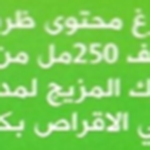
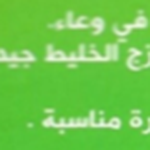
1- افرغ محتوى ظرف واحد من خلطة الفلافل البيروتي في وعاء.
2- أضف 250مل من الماء الفاتر (تقريباً كوب وربع) وامزج الخليط جيداً.
3- اترك المزيج لمدة لا تقل عن (15 - 20) دقيقة.
4- قلِّي الأقراص بكمية وافرة من الزيت على درجة حرارة مناسبة.
The text is a set of instructions accompanying a commercial falafel mix. The instructions guide the user to make falafel using the mix.
All the rhetorical devices in the text have been identified and annotated as shown below:
طريقة التحضير:
1- افرغ محتوى ظرف واحد من خلطة الفلافل البيروتي في وعاء.
2- أضف 250مل من الماء الفاتر (تقريباً كوب وربع) وامزج الخليط جيداً.
3- اترك المزيج لمدة لا تقل عن (15 - 20) دقيقة.
4- قلِّي الأقراص بكمية وافرة من الزيت على درجة حرارة مناسبة.
The following rhetorical devices were found when a rhetorical device analysis was performed on the text.
# |
Word | Rhetorical Device | Annotator's explanation of the rhetorical device |
|---|---|---|---|
Total Rhetorical Impact Score: 0 |
|||
# |
Rhetorical device |
Text | Annotator's explanation of the rhetorical device |
|---|---|---|---|
Total Rhetorical Impact Score: 0 |
|||
Arabic words are often composed of smaller parts which are added onto the start or end of the word. When performing quantitative analysis of Arabic texts, it is necessary to split such compound words into their constituent parts, or word tokens. When the compound words in this text were split, this resulted in 50 word tokens. Each of these has been identified and counted as shown below.
طريقة1 التحضير2 31 أفرغ4 محتوى5 ظرف6 71 خلطة8 الفلافل9 البيروتي10 في11 وعاء12 132 أضف14 15250 مل16 من17 الماء18 الفاتر19 تقريبا20 كوب21 و+22 ربع23 و+24 أمزج25 الخليط26 جيدا27 283 أترك29 المزيج30 ل+31 مدة32 لا33 تقل34 عن35 3615 3720 دقيقة38 394 قلي40 الأقراص41 ب+42 كمية43 وأفرة44 من45 الزيت46 على47 درجة48 حرارة49 مناسبة50
The text contains 0 different types of rhetorical devices, which have been used a total of 0 times. There are 50 word tokens in the text.
Rhetorical density is the number of rhetorical devices in the text (0) divided by the number of word tokens in the text (50), multiplied by 100.
The rhetorical density is therefore (0 ÷ 50) * 100 = 0 rhetorical devices per 100 word tokens.
This text is exactly at the 5th percentile of all the texts in the Balagha Corpus for rhetorical density. This means it is more rhetorically dense than 5% of all the 5 texts in the Balagha Corpus.
A weighting factor has been applied by the annotator for each of the 0 times a rhetorical device has been used. The weighting factor may be 1 or 2, depending on the impact, effectiveness or complexity of the way the rhetorical device has been used. These weighting factors are shown in the tables above as "Rhetorical Impact Score" for each rhetorical device. The sum of the Rhetorical Impact Scores in this text is 0.
The BALAGHA Score is the Rhetorical Impact Score divided by the number of word tokens in the text, multiplied by 100. By using the Rhetorical Impact Score rather than the number of rhetorical devices, the BALAGHA Score offers a more nuanced representation of rhetoricity than the rhetoric density alone.
This text's Rhetorical Impact Score is 0 and there are 50 word tokens. The BALAGHA Score is therefore (0 ÷ 50) * 100 = 0 impact-weighted rhetorical devices per 100 word tokens.
This text is exactly at the 5th percentile of all the 5 texts in the Balagha Corpus for BALAGHA Score. This means it has a higher BALAGHA Score than 5% of all the 5 texts in the Balagha Corpus. This text is therefore considered to have a level of rhetoricity which is "Very low".
The number of word tokens in the text.
Arabic words are often composed of smaller parts which are added onto the start or end of the word. When performing quantitative analysis of Arabic texts, it is necessary to split such compound words into their constituent parts, or word tokens.
Rhetorical density is the number of rhetorical devices in the text divided by the number of word tokens in the text, multiplied by 100.
For this text, there are 0 rhetorical devices and 50 word tokens.
The rhetorical density is therefore (0 ÷ 50) * 100 = 0 rhetorical devices per 100 words or word tokens.
The number of rhetorical devices in the text, but with a weighting for each one based on its impact, effectiveness or complexity.
The BALAGHA Score is the Rhetorical Impact Score divided by the number of word tokens in the text, multiplied by 100.
For this text, the Rhetorical Impact Score is 0 and there are 50 word tokens.
The BALAGHA Score is therefore (0 ÷ 50) * 100 = 0 impact-weighted rhetorical devices per 100 word tokens.
This chart illustrates the distribution of BALAGHA Scores in the Balagha Corpus, and the location of this text's BALAGHA Score in relation to the scores of other texts: